
Elevate Your Designs with CTS3D’s Advanced 3D Printing Solutions
In today’s fast-paced design world, innovation and precision are key to standing out. Advanced 3D printing solutions have revolutionized how designers bring their ideas to life, offering unmatched flexibility and detail. Whether you are working on prototypes, custom parts, or artistic creations, leveraging cutting-edge 3D printing technology can elevate your projects to new heights.
Unlocking Creativity with Advanced 3D Printing Solutions
Advanced 3D printing solutions provide designers with the ability to create complex geometries that traditional manufacturing methods cannot achieve. This technology allows for rapid prototyping, enabling quick iterations and improvements without the need for costly molds or tooling.
For example, a product designer can quickly print multiple versions of a component to test fit and function before finalizing the design. This reduces development time and costs significantly. Additionally, materials used in advanced 3D printing range from durable plastics to metals, expanding the possibilities for functional and aesthetic applications.
Key benefits include:
Speed: Rapid production of prototypes and final parts.
Customization: Tailor designs to specific needs or clients.
Complexity: Create intricate shapes and internal structures.
Cost-efficiency: Lower costs for small production runs.
By integrating these solutions into your workflow, you can push the boundaries of what’s possible in design and manufacturing.
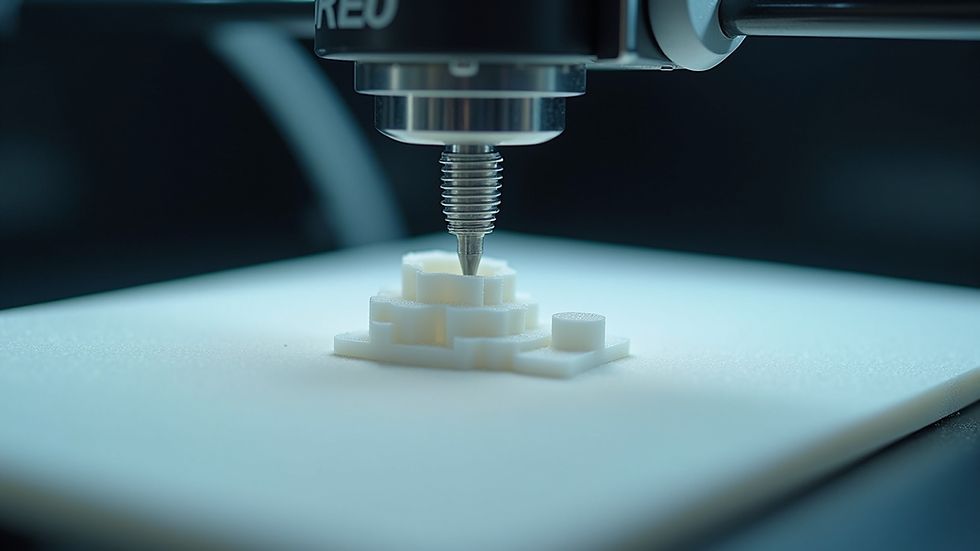
How Advanced 3D Printing Solutions Transform Design Processes
The design process is often iterative, requiring multiple revisions and testing phases. Advanced 3D printing solutions streamline this by allowing designers to produce physical models quickly and accurately. This hands-on approach helps identify design flaws early and facilitates better communication with clients and stakeholders.
For instance, architectural firms use 3D printing to create scale models of buildings, providing a tangible representation that helps clients visualize the final project. Similarly, in the automotive industry, engineers print parts to test aerodynamics and ergonomics before mass production.
Practical tips for maximizing 3D printing in design:
Start with high-quality 3D models: Use precise CAD software to ensure accuracy.
Choose the right material: Match the material properties to the intended use.
Optimize print settings: Adjust layer height, infill, and support structures for the best results.
Iterate quickly: Use feedback from printed models to refine designs.
These steps help you leverage advanced 3D printing solutions effectively, saving time and resources.
Materials and Technologies Driving Innovation
Advanced 3D printing is not just about the machines but also the materials and technologies that power them. From photopolymer resins used in stereolithography (SLA) to metal powders in selective laser sintering (SLS), each technology offers unique advantages.
Fused Deposition Modeling (FDM): Ideal for durable prototypes using thermoplastics.
Stereolithography (SLA): Produces high-resolution parts with smooth finishes.
Selective Laser Sintering (SLS): Enables strong, functional parts in nylon and metals.
Direct Metal Laser Sintering (DMLS): Used for complex metal components in aerospace and medical fields.
Choosing the right technology depends on your project’s requirements, such as strength, detail, and production volume. For example, jewelry designers often prefer SLA for its fine detail, while engineers might opt for DMLS for metal parts.

Integrating CTS3D’s Solutions into Your Workflow
To truly elevate your designs, partnering with a reliable provider of advanced 3D printing solutions is essential. cts3d offers a comprehensive range of services and technologies tailored to meet diverse design needs. Their expertise ensures high-quality prints, fast turnaround times, and expert guidance throughout the process.
By collaborating with a specialist like cts3d, you gain access to:
Expert consultation: Helping you select the best materials and technologies.
Custom solutions: Tailored to your project’s specifications.
Quality assurance: Rigorous testing to ensure precision and durability.
Scalability: From prototypes to small-batch production.
This partnership allows you to focus on creativity while leveraging the technical strengths of advanced 3D printing.
Future Trends in 3D Printing for Design
The future of 3D printing is bright, with continuous advancements expanding its capabilities. Emerging trends include multi-material printing, which allows combining different materials in a single print for enhanced functionality. Additionally, bioprinting and sustainable materials are gaining traction, opening new frontiers in healthcare and eco-friendly design.
Artificial intelligence is also being integrated to optimize print paths and reduce errors, making the process more efficient. Designers can expect even faster turnaround times and higher precision in the coming years.
To stay ahead, consider:
Experimenting with new materials and hybrid printing techniques.
Keeping up with software updates and AI-driven tools.
Exploring sustainable and recyclable materials.
Collaborating with experts to adopt cutting-edge technologies.
Embracing these trends will keep your designs innovative and competitive.
Taking Your Designs to the Next Level
Advanced 3D printing solutions offer unparalleled opportunities to enhance creativity, improve efficiency, and produce high-quality designs. By understanding the technologies, materials, and best practices, you can transform your ideas into reality with precision and speed.
Whether you are a product designer, engineer, or artist, integrating these solutions into your workflow will help you deliver exceptional results. Explore the possibilities with trusted partners and stay informed about the latest advancements to keep your designs at the forefront of innovation.


Le prove suggeriscono che il quadro analitico applicato qui è solido e coerente. L'analisi evita di andare oltre i limiti e rimane nell'ambito. Il sito web offre informazioni di background più approfondite su questo argomento. Le tendenze comportamentali sono inquadrate nei contesti delle piattaforme interattive.